Economy of Spain
Spain's economy is a highly developed social market economy.

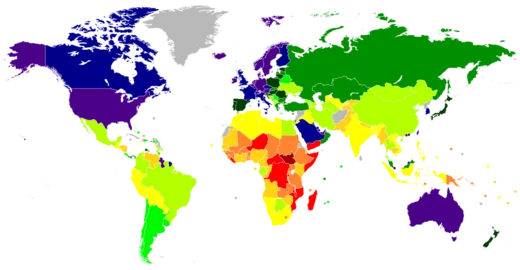
Spain has a highly developed social market economy, ranking as the world's 15th-largest by nominal GDP, the fourth-largest in the EU, and the sixth-largest in Europe. It is a member of the European Union, the eurozone, the OECD, and the World Trade Organization. Spain's economy is notable for its strong social security system, comprising roughly 23% of GDP, and its GDP per capita is approximately 2.55 times the world average, reflecting a relatively high level of economic productivity and development.
- GDP rank
- 15th-largest by nominal GDP globally
Lore & Background
The fastest growing sector at that time was services. After recovering from the global recession of the early 1990s, the economy began growing strongly by the mid-1990s, and this strong growth helped reduce government debt and unemployment.
Reader's Guide
Spain's economy has a highly efficient social security system and key areas of activity include automotive, medical technology, chemicals, shipbuilding, tourism, and textiles.
Did You Know?
- Spain's GDP per capita is approximately 2.55 times the world average.
- During the 2000s boom, Spain built more houses than Germany, France, and the UK combined.
- Spain's unemployment stood at 7.6% in October 2006, compared to over 20% in the early 1990s.
- The ESM programme for Spain ended in January 2014 with a draw of €41.3 billion, and repayment was completed early in 2019.
Global Standing and Economic Architecture
Spain operates as a highly developed social market economy that holds the 14th position worldwide by nominal GDP, the fourth spot within the European Union, and the sixth across all of Europe. As a full member of the EU, the eurozone, the OECD, and the World Trade Organization, it participates in a dense web of international economic institutions. Key pillars of production span the automotive sector, medical technology, chemical manufacturing, shipbuilding, tourism, and textiles. A particularly notable feature is Spain's social security framework, which the OECD recognizes as highly efficient and strong, consuming roughly 23% of GDP. On human development metrics, Spain sits 28th on the UN Human Development Index and 30th in GDP per capita according to the IMF, reflecting a broad-based standard of living that extends well beyond its industrial core.
The Eurozone Ascent, 1986 to 2007
The transformation that followed was remarkable. By the mid-1990s, the economy had resumed the growth trajectory that a global recession in the early 1990s had interrupted. The decade of expansion that followed saw unemployment fall from over 20% in the early 1990s to just 7.6% by October 2006, a figure that compared favorably with much of continental Europe. Three regions—the Basque Country, Madrid, and Navarre—pulled ahead of the 125% threshold.
The Property Boom and Debt Buildup
The darker side of this expansion was a dramatic accumulation of private debt. Household borrowing tripled in less than a decade as prospective buyers chased ever-rising asking prices.
Recession, Rescue, and the Road Back
Spain's entry into the late-2000s global recession came later than the EU and US averages, but the downturn proved far more prolonged. The ESM approved the program, and Spain drew €41 billion. Remarkably, the country achieved full repayment of that credit just 18 months later, closing the program.
Frequently Asked Questions
What kind of economic system does Spain operate under?
Spain runs a highly developed social market economy, blending private enterprise with a robust public welfare framework. It sits as the 15th-largest economy in the world by nominal GDP and the fourth-largest within the European Union.
Which major international economic bodies does Spain belong to?
Spain participates in the European Union, the eurozone, the OECD, and the World Trade Organization, giving it a strong voice in both European and global trade policy.
How large is Spain's social security spending relative to its economy?
Social security accounts for roughly 23% of Spain's GDP, making it one of the most prominent features of the country's economic structure and a key differentiator from many other advanced economies.
How does Spain's GDP per capita stack up against the global average?
At approximately 2.55 times the world average, Spain's per-capita output signals a relatively high level of economic development and productivity among its population.
Where does Spain rank among European economies?
Spain holds the sixth-largest economy in Europe overall and the fourth-largest within the EU, placing it firmly in the upper tier of continental economies by nominal GDP.
More in National Economies 25-34
Elsewhere in the National Economies universe
Spotted an error? Know more?
This is a living reference — every entry is fact-audited, and reader corrections feed straight into our audit queue. Suggest an edit · See this site's audit record